Navigating the vast oceans has always posed challenges for seafarers. Long before GPS and digital maps, mariners relied on an array of nautical instruments to chart their courses, determine their position, and ensure safe passage. These instruments, some ancient and some modern, have played a crucial role in the development of maritime exploration and global trade.
Historical Instruments
One of the earliest tools used for navigation was the astrolabe, a device that allowed sailors to determine their latitude by measuring the angle of stars above the horizon. This instrument, used by Arab and European mariners, laid the groundwork for celestial navigation.
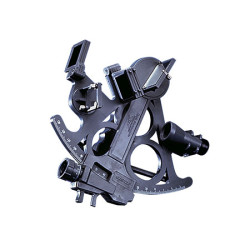
Another critical tool was the sextant, developed in the 18th century. It replaced earlier devices like the quadrant and cross-staff. The sextant measures the angle between a celestial object and the horizon, enabling accurate calculation of latitude and, with the help of a chronometer, longitude as well. It became a staple for mariners and is still used today as a backup for electronic systems.
The chronometer revolutionized navigation by allowing sailors to determine longitude accurately. Invented by John Harrison in the 18th century, it kept precise time at sea, a major breakthrough at the time. By comparing the local time (determined by the position of the sun) with the chronometer’s time (set to Greenwich Mean Time), sailors could calculate how far east or west they had traveled.
Modern Nautical Instruments
While traditional tools are still taught in naval academies and used as backups, modern vessels rely heavily on electronic instruments. The most prominent is the Global Positioning System (GPS). GPS allows for real-time positioning with incredible accuracy, making navigation faster and more reliable than ever before.
Radar is another essential instrument on ships today. It helps detect other vessels, landmasses, and obstacles, especially in poor visibility conditions such as fog or nighttime. Sonar is used to map the sea floor and detect underwater hazards, while autopilots assist in maintaining a vessel’s heading without constant manual steering.
The echo sounder, also known as a depth sounder, measures the depth of water beneath a vessel using sound waves. This instrument is crucial in preventing groundings and is especially useful when navigating unfamiliar or shallow waters.
Magnetic compasses, though centuries old, are still widely used for basic directional guidance. They are simple, reliable, and do not depend on power or satellite signals. For added precision, gyrocompasses are used on larger vessels. These devices use the Earth’s rotation to find true north and are unaffected by magnetic fields.
Conclusion
Nautical instruments have evolved from simple celestial tools to complex electronic systems. Despite the advancement in technology, the principles behind navigation remain rooted in observation, measurement, and calculation. Whether steering a wooden sailboat or commanding a high-tech cargo ship, mariners rely on these instruments to ensure their journeys are safe and successful. Understanding the history and use of nautical instruments is not only fascinating but also essential for anyone interested in the art and science of navigation.